
|
| |
| I. AYURVEDA& PANCHAKARMA THERAPY |
| |
1 . One week course - Basic Knowledge about Ayurveda
and its Beauty Therapy. (BABT)
2 . Two weeks course - Basic knowledge about Ayurveda
and its Beauty therapy & various
Massages. (BABM)
3 . Two weeks course - Basic knowledge about Ayurvedha various messages and kerala cookery
4 . One month course - Ayurvedic massage and
Panchakarma Therapy. (AMPT)
5. Ayurvedic Massage and Panchakarma Therapy + Kerala Cookery with Ayurvedic Diet (AMCAD)
6 . Two months course- Ayurvedic massage and
panchakarma therapy +
Cosmetology
plus
identification of Herbals and
Preparation of ayurvedic medicine (ACIHP)
|
| |
| Syllabus : |
| One week course - Basic Knowledge about Ayurveda
and its Beauty Therapy. (BABT) |
1.Introduction to Ayurveda.
2.Branches of Ayurveda.
3.Principles of Ayurveda.
4.Diet and exercises.
5.Theoretical knowledge about - Head massage , Face massage , Facial , Face Pack , Foot massage.
6. Practicals
- Head massage,Face massage,Facial and Face pack,Foot massage,Preparation of Henna . |
| |
| Two weeks course -Basic knowledge about Ayurveda & its Beauty therapy & various Massages. (BABM) |
1.Introduction to Ayurveda.
2.Branches of Ayurveda.
3.Principles of Ayurveda.
4.Diet and exercises.
5.Theoretical knowledge about -
Head massage,Face massage,Facial,Face Pack,Foot massage.
6.Different types of massages in Ayurveda.
7.Massages depends on Treatment aspects and Rejuvenation
8.’7’ positions in Massage.
9.Indication and procedure of some massages.
10.Practicals - Head massage,Face massage,SPA therapy, Body massage,Foot massage,Preparation of Henna, Abyanga,Elakkizhi,Podikkizhi,Nhavarakkizhi (2 Days). |
| |
| One month course - Ayurvedic Massage and
Panchakarma Therapy. (AMPT) |
1. Introduction to Ayurveda.
2. History of Ayurveda.
3. Different branches of Ayurveda.
4. Basic Principles of Ayurveda.
5. Panchakarma Therapy
6.Different types of treatments included in Ayurveda
7. Marma
8. Manas
9. About Ayurvedic Massages.- Indication, procedure and preparation.
10. Practicals.
- Abyanga (oil massage).
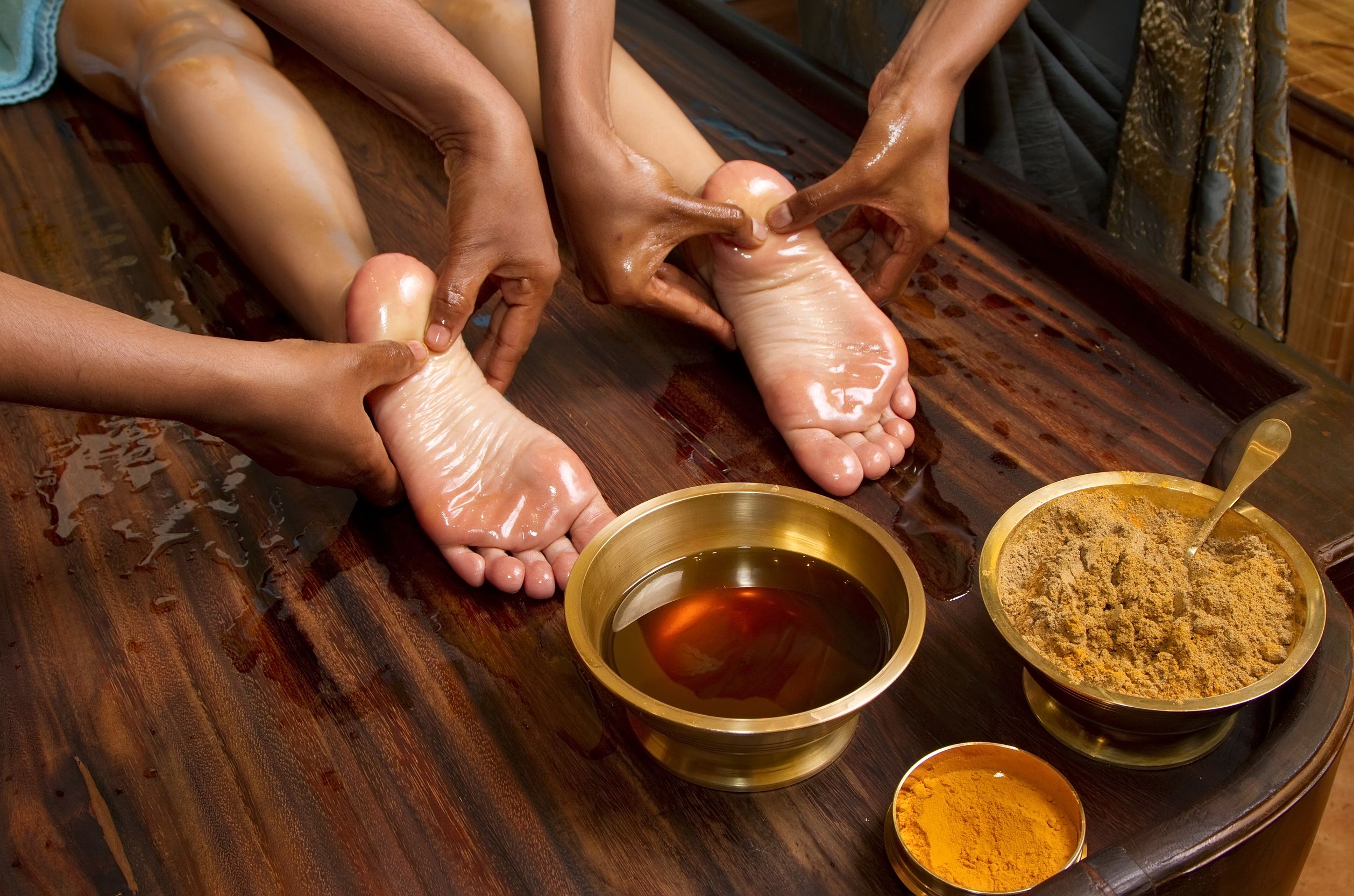
- Elakkizhi (bolus bag massage with medicinal leaves).
- Nhavarakkizhi (bolus bag massage with nhavara rice).
- Podikkizhi (bolus bag massage with medicinal powders).
- Shirodhara.
- Udhwarthana (Powder massage).
- Nasyam.
- Kadivasthi (for low back pain).
- Greeva vasthi (for Neck pain).
- Urovasthi (for chest pain).
- Januvasthi (for knee – joint pain).
- Akshitharpana (for improving the health of eyes).
- Pizhichil (oil bath).
- Kerala Kalarimarma massage.
|
| |
Two months course- Ayurvedic massage and panchakarma therapy +
Cosmetology
plus
identification of Herbals and
Preparation of ayurvedic medicine (ACHP) |
| |
| |
| |
Introduction
History of Bhaishajya Kalpana
Dravya and its classifications.
Aushadham (medicine) and its classifications.
Adharabhuta Sidhantas of Bhaishajya Kalpana
(Basic principles of ayurvedic pharmaceutics.)
Dravya Sangrahana (collection of herbs). |
|
| DRAVYA GUNA [HERBOLOGY] |
| |
a)
Family b) Botanical name
c) English name d) Morphology
e) Chemical composition f) Qualities g) Functions
h) Indications
I) Parts used j) Dosage k) preparations.
|
|
| PRACTICALS |
| |
- Avalehya (Confectionary preparation)
- Anjana (Collyrium)
- Arka preparation (Distillation)
- Churna (Powder)
- Guggulu purification & preparation.
- Hima (cold infusion)
- Kalka (Paste form)
- Kwatha (Decoctions)
- Mantha (thin gruel)
- Netra, Mukha, Nasika & Dhumapana kalpana
- Panaka (Drinks)
- Phanta (Hot infusion)
- Swarasa kalpana (juice expressed)
- Sneha & Taila kalpana (Medicated ghee& oil preparation).
- Takra & Gritha from milk (medical purpose).
- Vati (tablets)
- Vasti kalpana (preparation of enema medicine).
- Visha dravya shodhana (poison purification).
|
|
| |
| |
|
II. kerala coockery 2 weeks course
This is an exclusive course that will give you hands-on experience. Here
we are introducing the South Indian food which is not served in
restaurants in the way it is cooked at home. Also an opportunity to learn
the way how it is cooked in the homesteads rather than in the commercial
mass eating places. Almost every dish prepared at our centre has spices –
cinnamon ,cardamom, cloves, ginger, garlic, cumin, pepper, corriander,
turmeric etc…….-added to it, that add flavour and taste to them. Adding
curry leaves also help on increasing digestion.
We introduce some food items that we have for breakfast, lunch and
dinner. Also some drinks which have medicinal value (ayurvedic drink),
Keralites traditional favourite Kanji (rice gruel)and Payaru (green gram)
is also introduced. Our guest can stay with us and learn the traditional
kerala cookery along with some CBR special items. Thus you can enjoy the
whole in one roof and make your days a memorable experience. |
|
|
|
| |
III. YOGA
|
Yoga is neither an exercise nor a therapeutic Science. It’s a way of life through which body mind and spirit can be purified and strengthened. Limitation of man can be washed away by practising yoga. To make life success total health is most important. Yoga providing tools to attain this total health through asanas, pranayama and meditation. |
|
 |
|
1. Yoga course
7 days
14 days
21 days
2. Yoga Teachers Training Course
2months
|
|
IV. KERALA KALARI MARMA MASSAGE
2 weeks Course |
|
 |
|
| |
| |
|
| |
| |
V. KALARIPPAYATTU (Kerala martial art) |
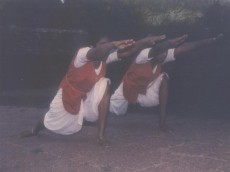
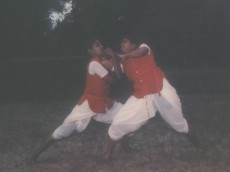
Kalarippayattu is the martial art peculiar to Kerala. Apart from endowing one with physical agility and prowess, this ancient art equips one with excellent concentration and mental equipoise. Traditionally the people of Kerala learnt
and practise to perfect Kalarippayattu as an art of warfare. Now people learn it for a high degree of physical fitness
and for self-defense. |
| The exercise in Kalarippayattu include : |
| |
 |
|
 |
| Maippayattu- conditioning and foundation exercises |
|
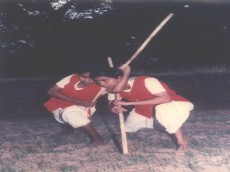
Kolthari- defense and attacks with a variety of wooden weapons. |
| |
|
|
 |
|
 |
| Angathaari- exercises with sharp weapons including sword, spear and dagger. |
|
Verumkai- barehanded defense and attack |
|
-2 weeks course |
| |
| Syllabus : |
Introduction to Kalarippayattu – history, purpose etc.
1. Two days intensive course in maippayattu. This will include the basic leg movements, jumps and postures of the body. Also choreographed movements.
2. Two days exercises with wooden batons and sticks. Basic defensive techniques with short stuff and long stuff. Also choreographed movements with stick held.
3. Two days exercises with sharp weapons like dagger, sword and shield. This will include defensive techniques using shieled and daggers.
4. Two days course in bare handed defense, This will include blocks, breaks, locks, throns etc |
| |
| If specialized training for longer period is required in any of the above, the course wil be adjusted accordingly. |
| |
| SCHEDULE FOR 2010-2011 : |
| Date of commencement of classes :- |
| |
|
| JUNE |
1ST JUNE2010 |
JULY |
1ST JULY 2010 |
AUGUST |
2ND AUG 2010 |
SEPTEMBER |
2ND SEP 2010 |
OCTOBER |
4TH OCT 2010 |
NOVEMBER
|
2ND NOV 2010 |
| DECEMBER |
2ND DEC 2010 |
|
| |
| SCHUDULE FOR 2011 : |
| |
|
JANUARY |
3 RD JAN 2011 |
FEBRUARY |
1 ST FEB 2011 |
| MARCH |
2 ND MAR 2011 |
| APRIL |
2 ND APRIL 2011 |
MAY |
BOOKING CLOSED |
|
| |
|
|
|
|
| |
Total seats- |
|
12 NOS |
|
| |
|
|
|
|
| |
Class timings - |
|
10:00 AM - 12:00 NOON |
|
| |
|
01:30 PM - 03:30 PM |
|
|